USTBC Chairman Keith Krach led senior U.S. business leaders to Taiwan to advance a new U.S.–Taiwan trade deal and strengthen trusted tech, AI governance, and resilient supply chains with Taiwan’s leadership.
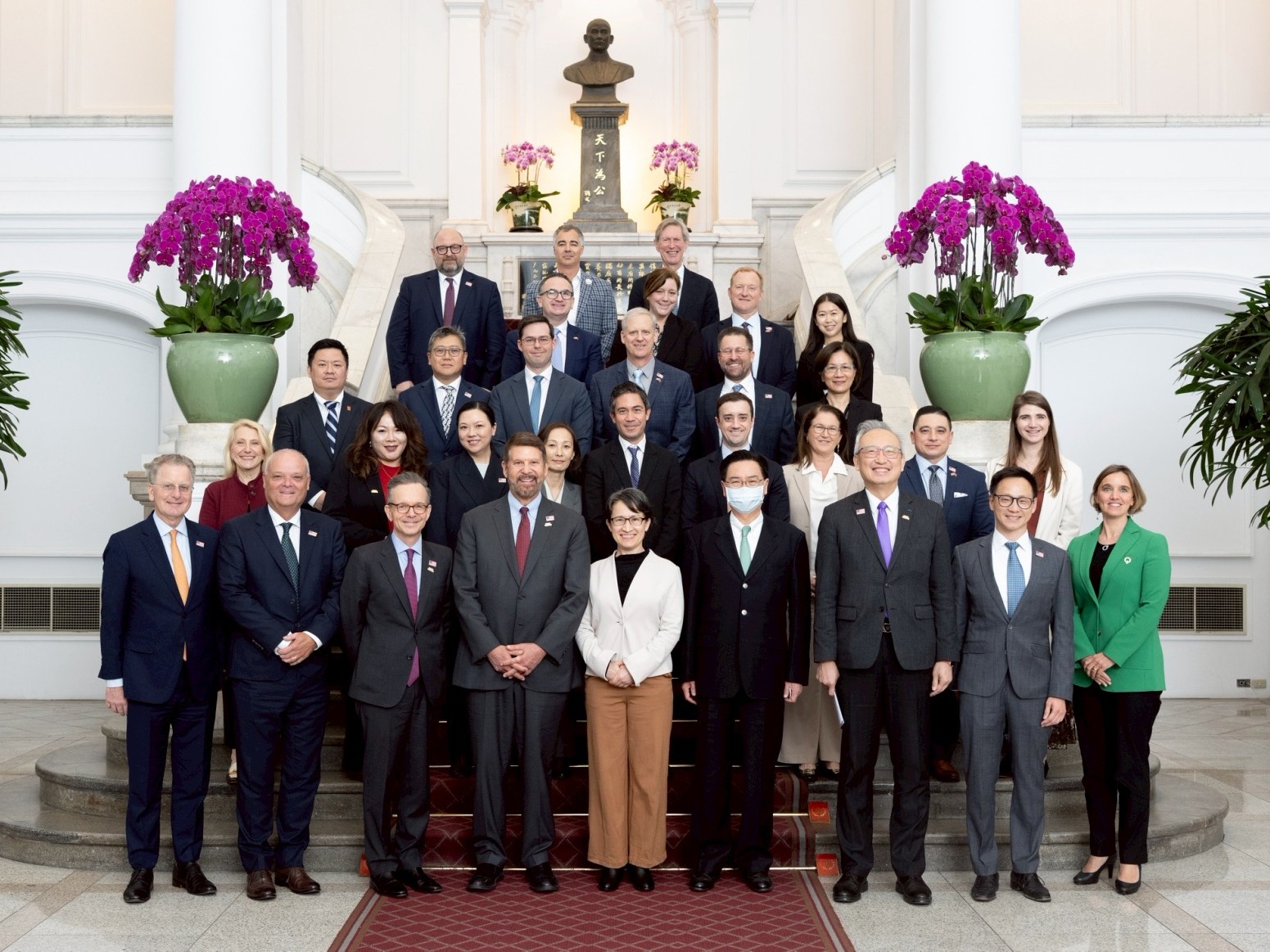
TAIPEI, TAIWAN – A delegation of senior business leaders, led by Keith Krach, Chairman of the U.S.-Taiwan Business Council (USTBC) and the Krach Institute for Tech Diplomacy at Purdue, together with USTBC President Rupert Hammond-Chambers, concluded its annual Chairman’s Delegation visit to Taiwan from January 26–28, 2026.
The visit came on the heels of the historic new trade deal between the United States and Taiwan—reducing tariffs on Taiwanese goods from 20% to 15% and driving expanded investments by Taiwanese semiconductor and technology companies in the U.S. It also coincided with the January 27 joint statement endorsing the Pax Silica Declaration—a U.S. initiative promoting trustworthy AI and supply chains.
Delegates represented a broad cross-section of industries, including technology, semiconductors, energy, finance, aerospace and defense, healthcare, logistics, and advanced manufacturing. Participating companies included Google, AWS, IBM, Qualcomm, Lockheed Martin, Citigroup, Uber, HP, Booz Allen Hamilton, TSMC, and others.
“I’m truly grateful for the progress we’ve made together over the past six years, starting with the Economic Prosperity Partnership Dialogue I was honored to launch in 2020,” said Krach. “The recent historic trade deal strengthens our trusted supply chains and underscores that economic security is national security.”
“The U.S.-Taiwan Business Council’s delegation reflects the depth and breadth of support for the bilateral trade relationship amongst the U.S. business community,” said Rupert Hammond-Chambers, USTBC President. “Taiwan’s role as a trusted technology partner and essential ally in the first island chain place it as an indispensable partner in the interests of the United States.”
Engagement with Taiwan’s Leadership and Democratic Institutions
A highlight of the visit was the delegation’s meeting with Vice President Hsiao Bi-khim. VP Hsiao expressed deep appreciation for the U.S. business community’s enduring support, specifically acknowledging Keith Krach’s pivotal role in establishing the Economic Prosperity Partnership Dialogue (EPPD) in 2020, which laid a strong foundation for bilateral economic ties. Discussions focused on advancing trade, technology, national resilience, and Taiwan’s role as a trusted partner in global supply chains.
In meetings with Premier Cho Jung-tai, he thanked the delegation for its focus on supply-chain resilience. Talks covered the recent tariff agreement, investments, double taxation, Taiwan’s AI infrastructure projects, and energy security.
Foreign Minister Lin Chia-lung presented the “Taiwan model” for strengthening U.S.-Taiwan economic partnership by aligning with U.S. policies, delivering on promises, and building U.S.-based industrial clusters to support Taiwanese firms while advancing AI supply-chain integration. He highlighted expanding collaboration in fields like robotics for developing markets, finalizing a double taxation avoidance agreement to ease investment, and partnering with democracies to foster shared prosperity.
The delegation began its visit with a comprehensive briefing from the American Institute in Taiwan (AIT), engaging with Director Raymond Greene and senior officials on regional dynamics, trade, investment, and security issues.
Over the course of the visit, the delegation held high-level meetings with National Development Council Minister Yeh Chun-Hsien; Minister of Digital Affairs Lin Yi-Jing; Minister without Portfolio and Chief Trade Negotiator Yang Jen-ni; Minister of Finance Chuang Tsui-yun; and Deputy Minister of Economic Affairs Cynthia Kiang.
The delegation also met with senior leadership of the Kuomintang (KMT), engaging leaders across Taiwan’s political spectrum.
Advancing Trusted Technology, Trade and Supply Chains
Across all engagements, discussions focused on key priorities including avoidance of double taxation, implementation of U.S.–Taiwan trade initiatives, semiconductor and advanced technology cooperation, artificial intelligence and digital governance, energy security, defense resilience, healthcare innovation, and financial services development.
The delegation also participated in a luncheon with the Chinese International Economic Cooperation Association (CIECA), exchanging views with Taiwan’s business leadership on expanding bilateral investment and commercial cooperation. The visit concluded with a delegation dinner attended by representatives from AmCham Taiwan and other local stakeholders.
“The U.S.-Taiwan Business Council’s delegation reflects the depth and breadth of support for the bilateral trade relationship amongst the U.S. business community,” said USTBC President Rupert Hammond-Chambers. “Taiwan’s role as a critical technology partner and essential ally in the first island chain place it as an indispensable partner in the interests of the United States.”
This timely engagement underscored the depth of U.S.-Taiwan ties and the shared commitment to strengthening economic, technological, and supply-chain cooperation grounded in trust and shared democratic values.
About the Krach Institute for Tech Diplomacy at Purdue
The Krach Institute is the world’s preeminent trusted technology accelerator. As the leader in the new category of Tech Diplomacy, the Institute integrates technology expertise, Silicon Valley strategies and foreign policy tools to build the Global Trusted Tech Network of governments, companies, organizations and individuals to accelerate the innovation and adoption of trusted technology and ensure technology advances freedom.
Visit the Krach Institute online at TechDiplomacy.org and follow on X, Facebook, LinkedIn and YouTube. Enroll in the Tech Diplomacy Academy to learn what you need to know now about key emerging technologies and their impact on business, policy and the global economy. Subscribe to the Institute’s weekly newsletter Tech Diplomacy Now for the latest news at the intersection of high tech and foreign policy.
For more information or to schedule an interview, please contact Megan Stencel at megan@javelindc.com or 703-490-8845.
JOIN THE MOVEMENT